Nowadays, the modern traveler does not seek to be a mere spectator; they seek to immerse themselves in living experiences that cannot be replicated anywhere else in the world. Corpus Christi in Cusco is exactly that: a festival where time seems to stand still and where history comes alive before your eyes. More than a religious celebration, it is the perfect setting to witness the profound encounter between Andean tradition and colonial heritage.
The Visual Clash between Catholic Faith and the Inca Legacy
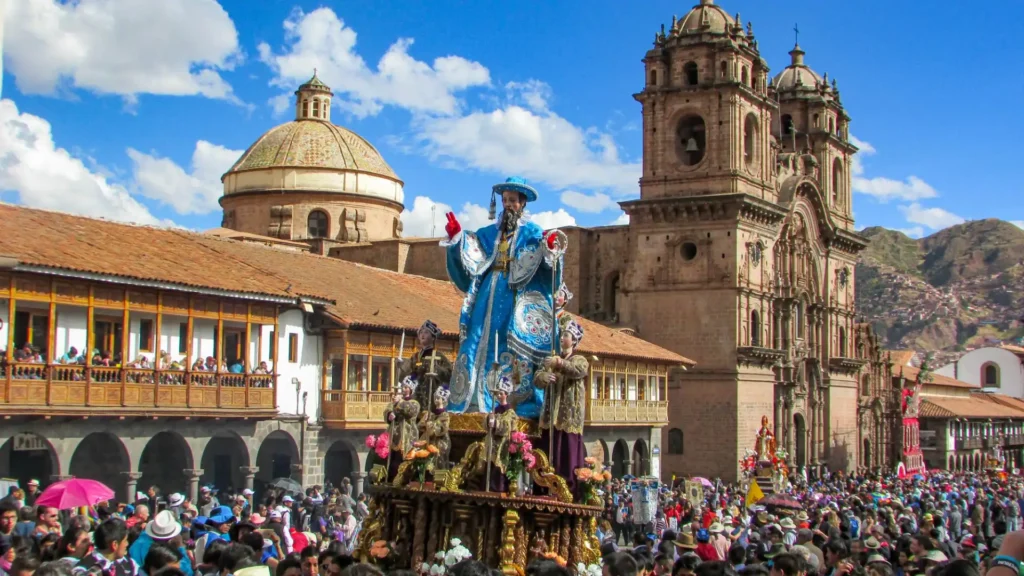
When the Spanish arrived in the Andes, they found that the Incas were already holding massive processions with the mummies of their rulers. To evangelize, the church replaced the Inca ancestors with saints and virgins. The result of this religious syncretism is what we see today in the streets of Cusco.
During Corpus Christi, fifteen richly adorned saints and virgins descend from their parishes to gather at the Cusco Cathedral. If you observe closely, you will notice that the devotion of the faithful is not strictly European. The dances, the music, the colors of the attire, and the offerings keep the spirit of the ancient Tawantinsuyo alive. It is a fascinating visual clash that makes the Corpus Christi festival an unparalleled anthropological event.
The History of the María Angola Bell: The Sound of Faith
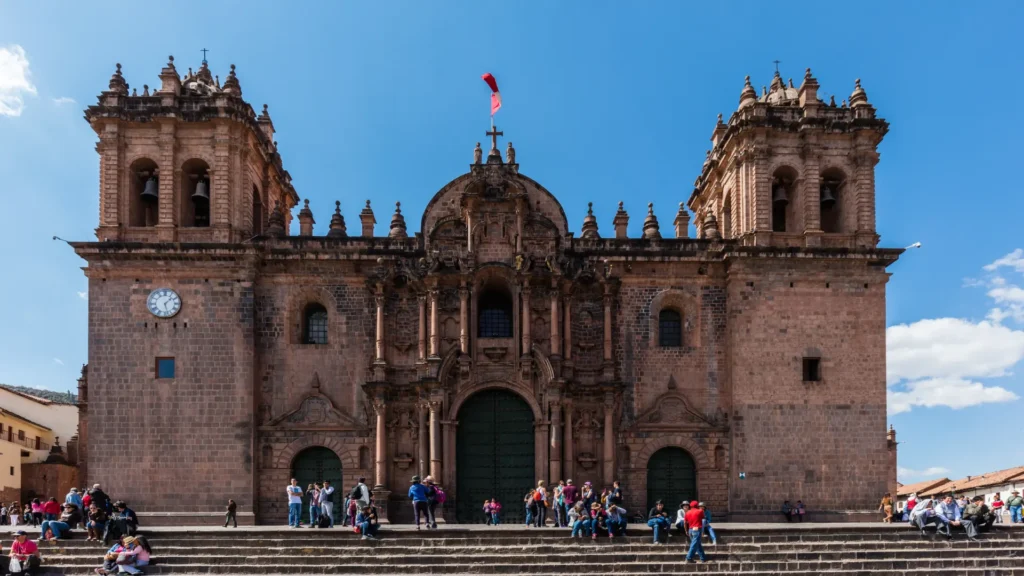
No Corpus Christi celebration is complete without the imposing sound of the María Angola bell. Considered the largest in Peru, this marvel of colonial engineering resides in one of the Cathedral’s towers.
Legend has it that it was cast in the 17th century and that its bronze alloy included over 300 pounds of pure gold donated by a devout woman named María Angola. Its deep and majestic sound, which according to ancient tales could be heard up to 40 kilometers away, marks the beginning of the grand procession. Hearing its chime resonate against the Andes mountains is an experience that thrills any traveler.
Experiential Tourism: An Experience Impossible to Replicate
Participating in the Corpus Christi in Cusco is engaging in cultural tourism in its purest form. While streaming platforms and social media show us the world through screens, experiencing this festival in person offers you something invaluable: authenticity.
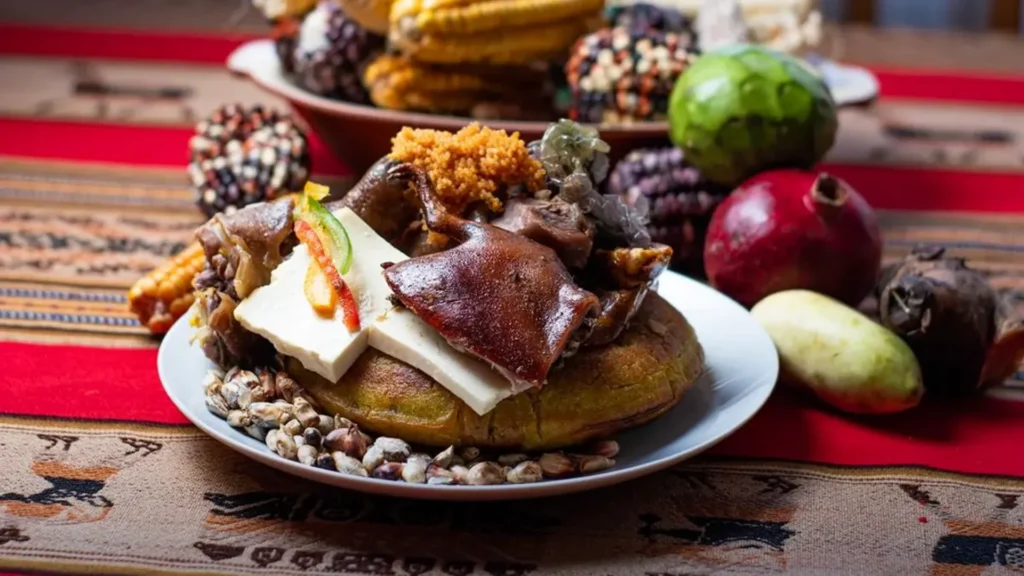
You will be able to walk alongside the mayordomos (litter bearers), hear Quechua mixed with religious chants, and taste the traditional Chiriuchu, the emblematic dish of this date that combines ingredients from the coast, highlands, and jungle of Peru in a single meal.
Why should you include this date in your itinerary?
Total immersion: You will connect with the local culture in a way that no museum can match.
Spectacular photography: The traditional costumes, the mirrors on the litters, and the colonial architecture offer unique opportunities for photography lovers.
Native gastronomy: It is the best time to try traditional dishes prepared following centuries-old recipes.
Be Part of the Andean Tradition
The world travels faster and faster, but in the Peruvian Andes, traditions stand firm. If you are looking for a trip that will transform you, that will teach you about cultural resistance and the beauty of syncretism, Cusco awaits you.
Are you ready to experience one of the most impressive festivals in South America? Let us organize every detail of your experience.
Write to us now and secure your spot to experience Corpus Christi like a true local!
Frequently Asked Questions (FAQ) about the Cusqueñan Corpus Christi
When is Corpus Christi celebrated in Cusco? The date is movable, as it depends on the Catholic calendar (exactly nine weeks after Holy Thursday). Generally, the celebrations fall between the months of May and June.
What does Corpus Christi mean to the people of Cusco? It is the most important religious festival in the city. It represents the deep faith of its people, but it is also a reaffirmation of their identity and their Andean tradition, celebrating abundance, community, and respect for their roots.
Which saints go in procession during the festival? There are 15 images of saints and virgins that come from different traditional districts and parishes of Cusco, such as San Jerónimo, San Sebastián, San Cristóbal, and the Virgin of Bethlehem, among others. They all gather in the Cathedral to “greet” the Lord of the Earthquakes (Cristo de los Temblores).
