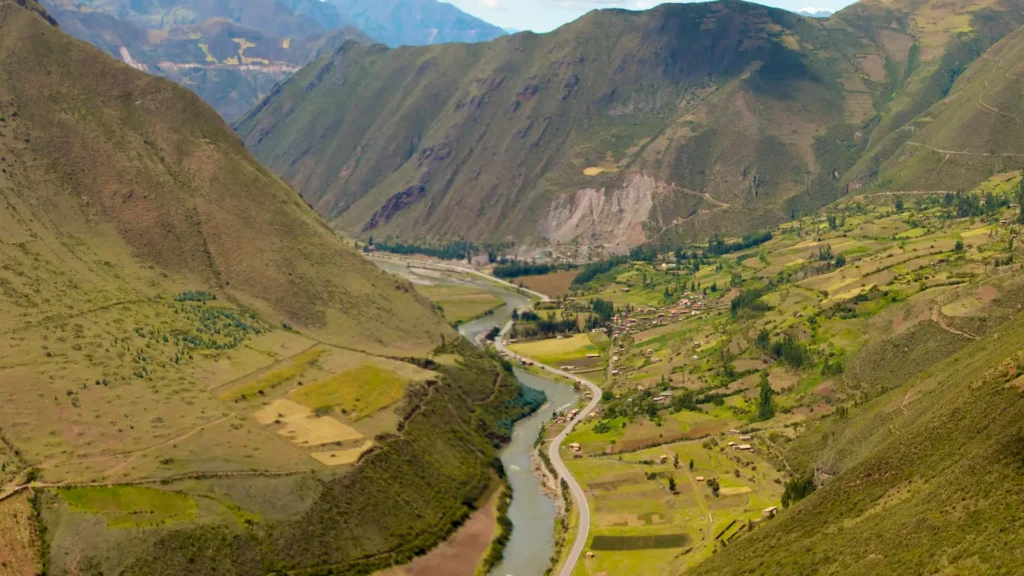
The heart of the Inca Empire beats strongly along the Vilcanota River. This guide to the Sacred Valley of the Incas is designed for you to structure your visit to one of the regions with the greatest historical, architectural, and cultural wealth in all of Peru.
Located at an average altitude of 2,800 m.a.s.l., the valley is not only the perfect geographical setting to acclimatize your body before climbing to Machu Picchu, but it also houses impressive citadels, agricultural laboratories, and towns that keep ancestral textile traditions alive. As local experts, we will break down the critical points you must include in your itinerary.
Guide to the Sacred Valley of the Incas
Each Inca settlement fulfilled a specific military, religious, or agricultural function. A well-designed itinerary must cover the architectural diversity of the valley.
Pisac: Archaeology and traditional market
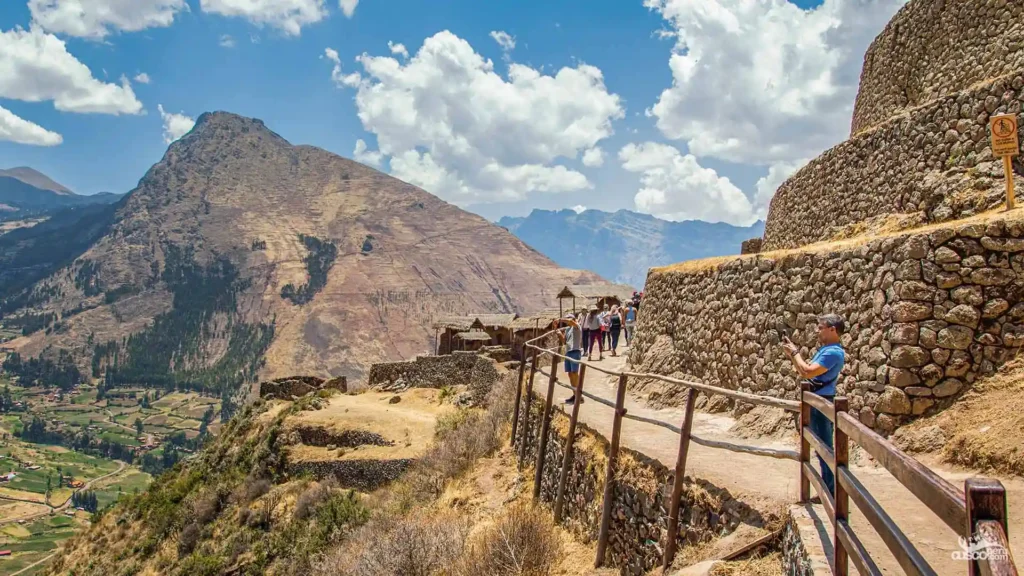
Pisac is the eastern gateway to the valley. Its archaeological complex, nestled high in the mountain, features a monumental terrace system and an impressive Inca cemetery embedded in the cliff. In the town’s urban area, the Pisac artisan market offers an excellent opportunity to acquire local silverware and ceramics.
Ollantaytambo: The living Inca city
Known for being one of the few towns in Peru that still preserves the original Inca urban planning, Ollantaytambo is a milestone of stone engineering. Its fortress and the enigmatic monoliths of the Temple of the Sun evidence advanced construction techniques.
Technical note: To enter this and other archaeological sites along the route, it is mandatory to have the Cusco Tourist Ticket (BTC).
Moray: The agricultural laboratory
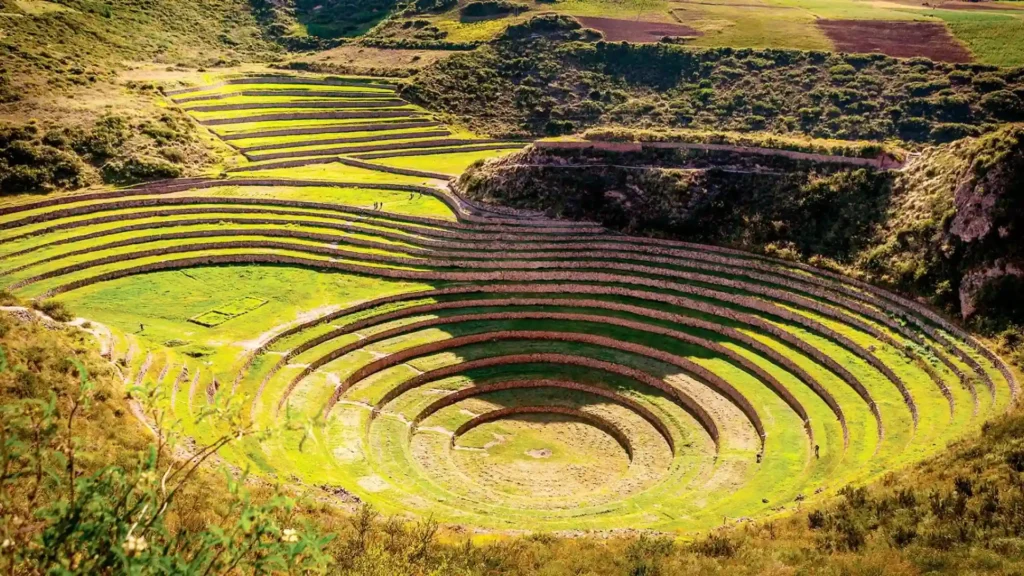
Moray breaks the traditional linear terrace scheme. This complex is made up of concentric circular terraces that simulate different microclimates. It is believed that the Incas used it as a botanical experimental station to adapt crops from different altitudes.
Combining a visit to Moray with the Maras Salt Mines is a must-do route. If you are looking for adventure, we suggest taking an ATV tour through Moray and Maras.
Chinchero: Textile tradition and community tourism
Located at 3,762 m.a.s.l., Chinchero is famous for its Inca palace (upon which a colonial church was built) and its impressive terraces. However, its true present-day value lies in its people. Here, communities weave garments using pre-Columbian techniques, natural dyes, and alpaca wool.
Participating in a textile demonstration here is one of the best community tourism experiences in Cusco, contributing directly to the local economy and preserving its legacy.
Sacred Valley of the Incas Guide
Touring the Sacred Valley on your own is possible using public transportation (colectivos), but inefficient if your time is limited. Logistics between the archaeological sites are complex. The smartest option is to hire an optimized itinerary that guarantees safe transportation, certified guiding, and admission management.
Frequently Asked Questions (FAQ)
How much time is needed to visit the Sacred Valley? To explore the main points (Pisac, Ollantaytambo, and Chinchero), you need a full day (approximately from 8:00 a.m. to 6:00 p.m.). If you wish to include Moray and the Maras Salt Mines, the ideal is to dedicate two days to the valley.
What is the altitude of the Sacred Valley compared to Cusco? The Sacred Valley has an altitude that varies between 2,800 and 2,900 m.a.s.l. (in areas like Urubamba and Ollantaytambo). It is lower than the city of Cusco (3,399 m.a.s.l.), making it the ideal place to start your acclimatization.
What does the tourist ticket for the Sacred Valley include? The Cusco Tourist Ticket (BTC) in its Partial format (Circuit III) includes exclusive entry to the archaeological sites of Pisac, Ollantaytambo, Chinchero, and Moray. It is valid for two consecutive days.
